

Make a donation
Vietnam topographic maps
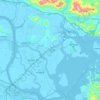
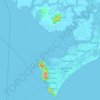
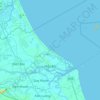
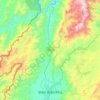
Click on a map to view its topography, its elevation and its terrain.
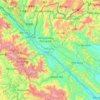
Lào Cai Province
There are ten major soil groups under 30 categories in the province, under ten land groups. The land groups are: The Alluvial group (1.47% of the land area) along the Red River is good for growing food crops and trees; the Oxisol type which occupies 40% of land area has generally reddish brown soil, below…
Average elevation: 791 m
Make a donation



Make a donation

Make a donation


Make a donation


Make a donation
Lào Cai
The city has diverse topographical and geological features, including hill, mountainous, half mountainous, coastal plains and coastal sand dunes.
Average elevation: 609 m

Tay Ninh province
Tây Ninh has a tropical monsoon climate with two distinct seasons: a dry season from December to April and a rainy season from May to November. The temperature remains fairly consistent, with cooler and drier conditions in the early dry season and warmer, more humid weather in the rainy season. Daytime…
Average elevation: 23 m
Make a donation

Make a donation

Quảng Ngãi Province
Quảng Ngãi's topography is dominated by a large plain along the coast and in the center of the province and by mountains and hills in the west and along its borders with Quảng Nam and Bình Định provinces. Lowlands extend further inland along Trà Khúc River. The province's highest peak is at 1630m in…
Average elevation: 285 m


Make a donation
Phu Yen province
The province's topography consists of hilly regions in the west (70%) and the fertile plain of Tuy Hòa in the east. Lowlands also extend west along Đà Rằng River. The highest peaks are at 1,592 m on the border of Khánh Hòa province in the south and at 1,331 m in the northwest (Đồng Xuân District).…
Average elevation: 220 m


Bac Kan Province
The province is in the northeast midland mountainous area of Vietnam. Its terrain has the highest altitude among the 11 provinces of the region. Forest area dominates more than 95% of the province. The remainder is available for agricultural and other uses. Due to this rugged and forested topography,…
Average elevation: 458 m
Make a donation


Quang Binh province
Coordinates 16°55’ to 18°05’ North and 105°37’ to 107°00’ East. It borders Hà Tĩnh province on the north with the Ngang mountain pass as the natural frontier, Quảng Trị province to the south, Laos to the west, and faces the Dong Sea to the east. The narrowest part from east (seaside) to west…
Average elevation: 210 m
Make a donation

Binh Duong province
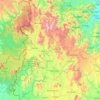
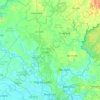
Bình Dương province is situated on relatively level terrain, and is crossed by the Saigon, Đồng Nai, and Bé rivers. It also has some hills. Bình Dương can be seen from the Lái Thiêu central church. Although Bình Dương is flat, it is higher than Ho Chi Minh City. Across Bình Dương there are…
Average elevation: 38 m
Make a donation
Đà Nẵng
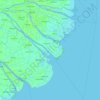
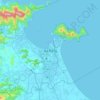
Geologically, Da Nang is at the edge of a Paleozoic fold belt known as the Truong Son Orogenic Zone, whose main deformation occurred during the early Carboniferous period. Da Nang's topography is dominated by the steep Annamite mountain range to the north and north-west, which features peaks ranging from 700…
Average elevation: 52 m
Make a donation

Fansipan
Vietnam > Lao Cai province > Sa Pa > Hoàng Liên
Fansipan is the tallest mountain in the Hoang Lien Son Range, situated on the border of Lào Cai Province and Lai Châu Province with its peak located on the Lào Cai side. The mountain is part of the Hoàng Liên National Park. It has a topographic prominence of 1,613 metres (5,292 ft), ranking 6th in Vietnam.
Average elevation: 2,616 m
Make a donation
Cao Bằng Province
The Peninsular valley of Cao Bằng province is formed between the Bằng Giang and Hien rivers. The two rivers confluence to the northwest of the town. In the war with China the town was damaged in 1979 and has been since rebuilt. The market in Cao Bằng town is believed to be the largest in Vietnam. Cao…
Average elevation: 638 m

Hậu Giang Province
An estimated 80% of the province will be underwater following a 0.5 metres (1 ft 8 in) sea level rise relative to the current land elevation, which is subsiding over time.
Average elevation: 3 m
Make a donation
Đắk Nông Province
Đắk Nông is about 500m above sea level in elevation. The terrain is lower in the west. Đắk Nông has large fields and lakes in the south. Đắk Nông has three main river systems: the Ba River, the Srepok (or Sêrêpôk) river (part of the Mekong river basin) and Đồng Nai river demarking the…
Average elevation: 557 m

Tỉnh Tiền Giang
Tiền Giang province has flat terrain with a slope below 1%, and the altitude varying from 0–1.6 metres (0.0–5.2 ft) in comparison with the sea level. The whole province area is in the lower section of Mekong River. Its current terrain surface and land was created by the accumulation of Mekong river silt…
Average elevation: 3 m
Make a donation

Gia Lai Province
Gia Lai is a mountainous province located in the northern Central Highlands at an average altitude of 700 - 800 m above sea level with an area of Convert 15510.13 km2, an average population of 1,590,980 people (2022). Gia Lai borders Kon Tum Province to the north, Dak Lak Province to the south, Cambodia to the…
Average elevation: 469 m
Bình Định Province
The majority of Bình Định province is covered by mountains or hills. Elevations range from 0 at the coast to around 1200 meters above sea level in An Lão district in the north-west of the province. While most of the mountains as well as the highest peaks are in the west, there are mountains throughout the…
Average elevation: 281 m

Make a donation

Bình Phước Province
Bình Phước province is relatively flat with an elevation of between 50 metres (160 ft) and 200 metres (660 ft) throughout most of the province. The elevation is gradually higher towards the east of the province and reach around 500 metres (1,600 ft) near parts of the border with Đắk Nông province of…
Average elevation: 190 m


Make a donation
Hung Yen Province
Hưng Yên has the features of a delta province: flat topography without hills and mountains. There are 61,037 hectares of agricultural land, of which 55,645 hectares (91%) are for yearly cultivation and the remainder are for cultivation of perennial plants, fish farming, specialized cultivation and other…
Average elevation: 5 m

Bac Giang Province
The terrain is moderately mountainous, lying between the high mountains to the north and the Red River Delta to the south. Although a large part of the terrain is mountainous most of it is not isolated. The region to the northern end of the province is mountainous uncleared forest. To the east and southeast of…
Average elevation: 178 m
Make a donation

Yen Bai Province
The topography is steep, rising from east to west and from south to north. The average elevation is about 600 metres (2,000 ft) above sea level and can be divided into two regions: low-lying regions on the left bank of the Red River basin and the high right bank of the Red River and in the plateau between the…
Average elevation: 644 m

Điện Biên Province
Chua ta cave: Located at an altitude of nearly 1,000m above sea level, in a limestone mountain range with a geological tectonic process of millions of years, Tham Khen cave in Muong Dun commune, Tua Chua district has also been recognized by the Ministry of Culture. Sports and Tourism ranked national relics and…
Average elevation: 897 m


Northeast
The northern part junction with Vietnam-China border are the plateau (highland) turns from west to east are: Bắc Hà, Quản Bạ, Đồng Văn. Two first plateau has an average elevation of 1000-1200m. Đồng Văn Plateau is 1600m. Rivers and streams flowing through the plateau created long and deep…
Average elevation: 464 m
Make a donation


Tuyen Quang Province
The province has widely varying topography covering high mountains deep valleys; the dominant elevation of the province is in the range 200–600 metres (660–1,970 ft). The province is in the foothills of the Northern Highlands, which forms a broad crescent around the Tonkin Delta; its southern part has…
Average elevation: 324 m

Make a donation


Hà Giang Province
The provincial capital, also called Hà Giang, is connected by Highway 2 and is 320 km away from Hanoi. The border crossing is at Thanh Thủy, 25 km from the provincial capital. It is one of the poorest provinces of Vietnam as it has mountainous topography with the least potential for agricultural development.
Average elevation: 839 m
Yen Bai City
The topography is steep, rising from east to west and from south to north. The average elevation is about 600 metres (2,000 ft) above sea level and can be divided into two regions: low-lying regions on the left bank of the Red River basin and the high right bank of the Red River and in the plateau between the…
Average elevation: 72 m
Make a donation
