Geolocate

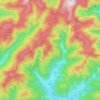
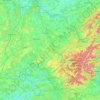
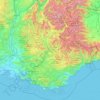
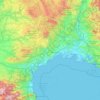
Limousin topographic map

Click on the map to display elevation.

About this map

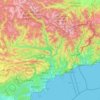
Name: Limousin topographic map, elevation, terrain.

Location: Limousin, Metropolitan France, France (43.11754 -0.85931 48.31754 4.34069)

Average elevation: 257 m

Minimum elevation: -3 m

Maximum elevation: 1,773 m

Other topographic maps

Click on a map to view its topography, its elevation and its terrain.
Paris

France > Ile-de-France > Paris

Paris in its early history had only the rivers Seine and Bièvre for water. From 1809, the Canal de l'Ourcq provided Paris with water from less-polluted rivers to the north-east of the capital. From 1857, the civil engineer Eugène Belgrand, under Napoleon III, oversaw the construction of a series of new…

Average elevation: 62 m
Normandy

France

Average elevation: 98 m

Brittany

France > Brittany > Landerneau > Loudéac

The Armorican massif reaches its maximal elevation outside of Brittany, in neighbouring Mayenne, at 417 m, and slopes towards the west before straightening on its western extremity, with the Montagnes Noires and the Monts d'Arrée. The highest hill in Brittany is the Roc'h Ruz in the Monts d'Arrée, at 385 m…

Average elevation: 50 m

Lyon

France > Auvergne-Rhône-Alpes

Average elevation: 390 m

Grenoble

France > Auvergne-Rhône-Alpes > Isère

Except for a few dozen houses on the slopes of the Bastille hill of Chartreuse, Grenoble is exclusively built on the alluvial plain of the rivers Isère and Drac at an altitude of 214 metres (702 ft). As a result, the city itself is extremely flat. Mountain sports are an important tourist attraction in summer…

Average elevation: 246 m

Tahiti

France > French Polynesia

Average elevation: 160 m

Bénivay-Ollon

France > Auvergne-Rhône-Alpes > Drôme

Average elevation: 624 m

Montembœuf

France > Nouvelle-Aquitaine > Charente

Average elevation: 264 m

Chamonix-Mont-Blanc

France > Auvergne-Rhône-Alpes > Upper Savoy

Due to its elevation, Chamonix has a humid continental climate (Dfb, according to the Köppen climate classification), with an average annual precipitation of 1,280 mm (50 in). Summers are mild and winters are cold and snowy.

Average elevation: 2,215 m

Les Houches

France > Auvergne-Rhône-Alpes > Upper Savoy

Les Houches, located 6 kilometres from Chamonix, is a ski resort with a domain which extends from an altitude of 950 metres up to 1900 metres. Long descents through tree-lined slopes are combined with impressive views of the Mont Blanc massif and the Chamonix valley.

Average elevation: 1,728 m

Bordeaux

France > Nouvelle-Aquitaine > Gironde

Average elevation: 18 m

Paris

France > Ile-de-France

Paris is situated on a relatively flat terrain, with its average elevation around 150 feet (45 meters) above sea level. The city lies within the Paris Basin, a low-lying area that was shaped over millennia by the meandering River Seine, which cuts through the city. Though generally flat, Paris is home to…

Average elevation: 59 m

Corsica

France

Under the Köppen climate classification scheme, coastal regions are characterized by a hot-summer Mediterranean climate (Csa). Further inland, a warm-summer Mediterranean climate (Csb) is more common. At the highest elevation locations, small areas with a subarctic climate (Dsc, Dfc) and the rare cold-summer…

Average elevation: 139 m

Les Cabannes

France > Occitania > Ariège

Average elevation: 653 m

Llo

France > Occitania > Pyrénées-Orientales

Average elevation: 1,780 m

Annecy

France > Auvergne-Rhône-Alpes > Annecy

Annecy has an oceanic climate (Köppen Cfb) in spite of its relatively far inland position. Influenced by its elevation, summers are rather moderate on average, although they can be highly variable with extreme heat spikes. Winters see occasional freezing temperatures, but most often stays in the single-digits…

Average elevation: 554 m

Toulouse

France > Occitania > Haute-Garonne

The first half of the 14th century was a prosperous period, despite the dismemberment in 1317 of the very large bishopric of Toulouse (which lost two thirds of its area and a large part of its income, a loss only partially compensated by its elevation to the rank of archbishopric), and the episode of the…

Average elevation: 155 m

Provence-Alpes-Côte d'Azur

France

Average elevation: 665 m

Noumea

France > South Province

Average elevation: 8 m

Résidence

France > Hauts-de-France > Nord > Villeneuve-d'Ascq

Average elevation: 34 m

Le Mont-Saint-Michel

France > Normandy > Manche

Average elevation: 5 m

Dordogne

France > Nouvelle-Aquitaine

Average elevation: 164 m

Saint-Lary-Soulan

France > Occitania > Hautes Pyrenees

Average elevation: 1,864 m

Villers-Marmery

France > Grand Est > Marne

Average elevation: 170 m

Montaud

France > Auvergne-Rhône-Alpes > Isère

Average elevation: 749 m

Nemours

France > Ile-de-France > Seine-et-Marne

Average elevation: 85 m

Cailhau

France > Occitania > Aude

Average elevation: 237 m

Cavan

France > Brittany > Côtes-d'Armor

Average elevation: 88 m

Besançon

France > Bourgogne – Franche-Comté > Doubs

The city initially developed in a natural meander (or oxbow loop) of the river Doubs with a diameter of almost 1,000 metres (3,281 feet). The flat inner loop has an elevation of about 250 metres (820 feet), and is bounded to the south by a hill called Mont Saint-Étienne, which has a maximum height of 371…

Average elevation: 332 m

Soula

France > Occitania > Ariège

Average elevation: 664 m

Bédarieux

France > Occitania > Hérault

Average elevation: 299 m

Montpellier

France > Occitania > Hérault

Montpellier's highest point is the Place du Peyrou, at an altitude of 57 m (187 ft). The city is built on two hills, Montpellier and Montpelliéret, thus some of its streets have great differences of altitude. Some of its streets are also very narrow and old, which gives it a more intimate feel.

Average elevation: 41 m

Paris

France > Ile-de-France

Average elevation: 62 m

Bora-Bora

France > French Polynesia > Bora-Bora

The bay of Tuuraapuo was the main crater of the volcano, whose collapsed southwestern edge only subsists still in the islets Toopua and Toopua-iti, which culminate respectively at 148 m (486 ft) and 17 m (56 ft), altitude. The volcanic rocks are of basaltic type, consisting mostly of alkaline basalts, some…

Average elevation: 11 m

Charleville

France > Grand Est > Marne

Average elevation: 203 m

Caille

France > Provence-Alpes-Côte d'Azur > Maritime Alps

Average elevation: 1,235 m

Paris

France > Ile-de-France > Paris

Paris in its early history had only the rivers Seine and Bièvre for water. From 1809, the Canal de l'Ourcq provided Paris with water from less-polluted rivers to the north-east of the capital. From 1857, the civil engineer Eugène Belgrand, under Napoleon III, oversaw the construction of a series of new…

Average elevation: 62 m
Saint Barthélemy

France > Saint Barthélemy

Morne de Vitet, 286 metres (938 feet) in height, is the highest peak on the island. Hills and valleys of varying topography cover the rest of the island. Notable are Morne Rouge, Morne Criquet, Morne de Grand Fond, Morne de Dépoudré and Morne Lurin. The largest bodies of water on the island are Étang de…

Average elevation: 4 m

Burgundy

France

Average elevation: 286 m

Réunion

France > Réunion

Average elevation: 532 m

Lison

France > Normandy > Calvados

Average elevation: 33 m

Orval

France > Centre-Val de Loire > Cher

Average elevation: 165 m

Bran

France > Nouvelle-Aquitaine > Charente-Maritime

Average elevation: 81 m

Upper Savoy

France > Auvergne-Rhône-Alpes

Haute-Savoie has the largest range of elevations of all the departments in France; the lowest point is 250 metres (820 ft) in the Rhône Valley, and the highest Mont Blanc at 4,810.40 metres (15,782.2 ft). Some of the world's best-known ski resorts are in Haute-Savoie.

Average elevation: 1,032 m

Verdun

France > Grand Est > Meuse

Average elevation: 256 m

Béziers

France > Occitania > Hérault

Average elevation: 44 m

Blois

France > Centre-Val de Loire > Loir-et-Cher

Average elevation: 95 m

Island

France > Bourgogne – Franche-Comté > Yonne

Average elevation: 255 m

Vigneulles

France > Grand Est > Meurthe-et-Moselle

Average elevation: 256 m

Saint-Mihiel

France > Grand Est > Meuse

Average elevation: 277 m

Seicheprey

France > Grand Est > Meurthe-et-Moselle

Average elevation: 256 m

Guadeloupe

France

The main two islands are Basse-Terre (west) and Grande-Terre (east), which form a butterfly shape as viewed from above, the two 'wings' of which are separated by the Grand Cul-de-Sac Marin, Rivière Salée and Petit Cul-de-Sac Marin. More than half of Guadeloupe's land surface consists of the 847.8 km2…

Average elevation: 37 m

Côtes-d'Armor

France > Brittany

Average elevation: 78 m

Ra’iātea

France > French Polynesia

There are three main mountain masses on the island, connected by lower ridges. The central mass includes Mount Tefatoaiti (1,017 m), the island's highest peak. The northern mass is known as the Temehani Plateau. The plateau generally undulates between 600 and 650 metres elevation, rising higher in places…

Average elevation: 62 m

Langley

France > Grand Est > Vosges

Average elevation: 292 m

Bulan

France > Occitania > Hautes Pyrenees

Average elevation: 546 m

Castel

France > Hauts-de-France > Somme > Moreuil

Average elevation: 80 m

Ollioules

France > Provence-Alpes-Côte d'Azur > Var

Average elevation: 128 m

Binas

France > Centre-Val de Loire > Loir-et-Cher

Average elevation: 128 m

Normandy

France

Average elevation: 98 m

Sainte-Marie

France > Occitania > Gers

Average elevation: 175 m

Kerguelen Island

France > French Southern and Antarctic Lands

The highest point is Mont Ross in the Gallieni Massif, which rises along the southern coast of the island and has an elevation of 1,850 metres (6,070 ft). The Cook Ice Cap (French: Calotte Glaciaire Cook), France's largest glacier with an area of about 403 km2 (156 sq mi), lies on the west-central part of the…

Average elevation: 45 m

Verzy

France > Grand Est > Marne

Average elevation: 194 m

Queaux

France > Nouvelle-Aquitaine > Vienne

Average elevation: 135 m

Trépail

France > Grand Est > Marne

Average elevation: 200 m

Valleroy

France > Grand Est > Meurthe-et-Moselle

Average elevation: 225 m

La Croix-aux-Mines

France > Grand Est > Vosges

Average elevation: 705 m

Sainte-Marie

France > Occitania > Hautes Pyrenees

Average elevation: 582 m

Bois-de-Haye

France > Grand Est > Meurthe-et-Moselle

Average elevation: 292 m

Pontarlier

France > Bourgogne – Franche-Comté > Doubs

Nestled in the heart of the Jura Mountains near the Swiss border, the town lies along the Doubs River and occupies the Arlier plain at approximately 830–837 m elevation. It is overshadowed by the Grand Taureau peak, which reaches 1,323 m.

Average elevation: 906 m

Ardennes

France > Grand Est

Covering 5,229 square kilometres (2,019 square miles), the department was the smallest among the four contributors to Champagne-Ardenne. It is diverse in climate, topography, natural vegetation and land use, which is a mixture of forest and arable farming.

Average elevation: 225 m

Saint-Denis

France > Ile-de-France > Seine-Saint-Denis

Average elevation: 41 m

Bagnères-de-Luchon

France > Occitania > Haute-Garonne

Average elevation: 1,669 m

Versailles

France > Ile-de-France > Yvelines

Versailles is located 17.1 km (10.6 mi) west-southwest from the centre of Paris. The city sits on an elevated plateau, 130 to 140 metres (425 to 460 ft) above sea-level (whereas the elevation of the centre of Paris is only 33 m (108 ft) above sea level), surrounded by wooded hills: in the north the forests of…

Average elevation: 142 m

Royan

France > Nouvelle-Aquitaine > Charente-Maritime

Average elevation: 13 m

Aups

France > Provence-Alpes-Côte d'Azur > Var

Average elevation: 610 m

Saint Joseph Island

France > French Guiana > Cayenne

Average elevation: 1 m

Tende

France > Provence-Alpes-Côte d'Azur > Maritime Alps

Average elevation: 1,612 m